

Health problems often develop without obvious symptoms. This is why more and more people are opting for preventive medical screening. By detecting possible risk factors early, conditions can be treated faster and your health remains better protected. At Doctor's House Antverpia becomes a screening not limited to one screening. Each screening is tailored to your age, medical history, lifestyle and any risk factors. The aim is to get a complete picture of your health and detect potential problems early. But what exactly is checked during a screening? Below is an overview of the different tests and their purpose.
What is examined at a Cardio Check?
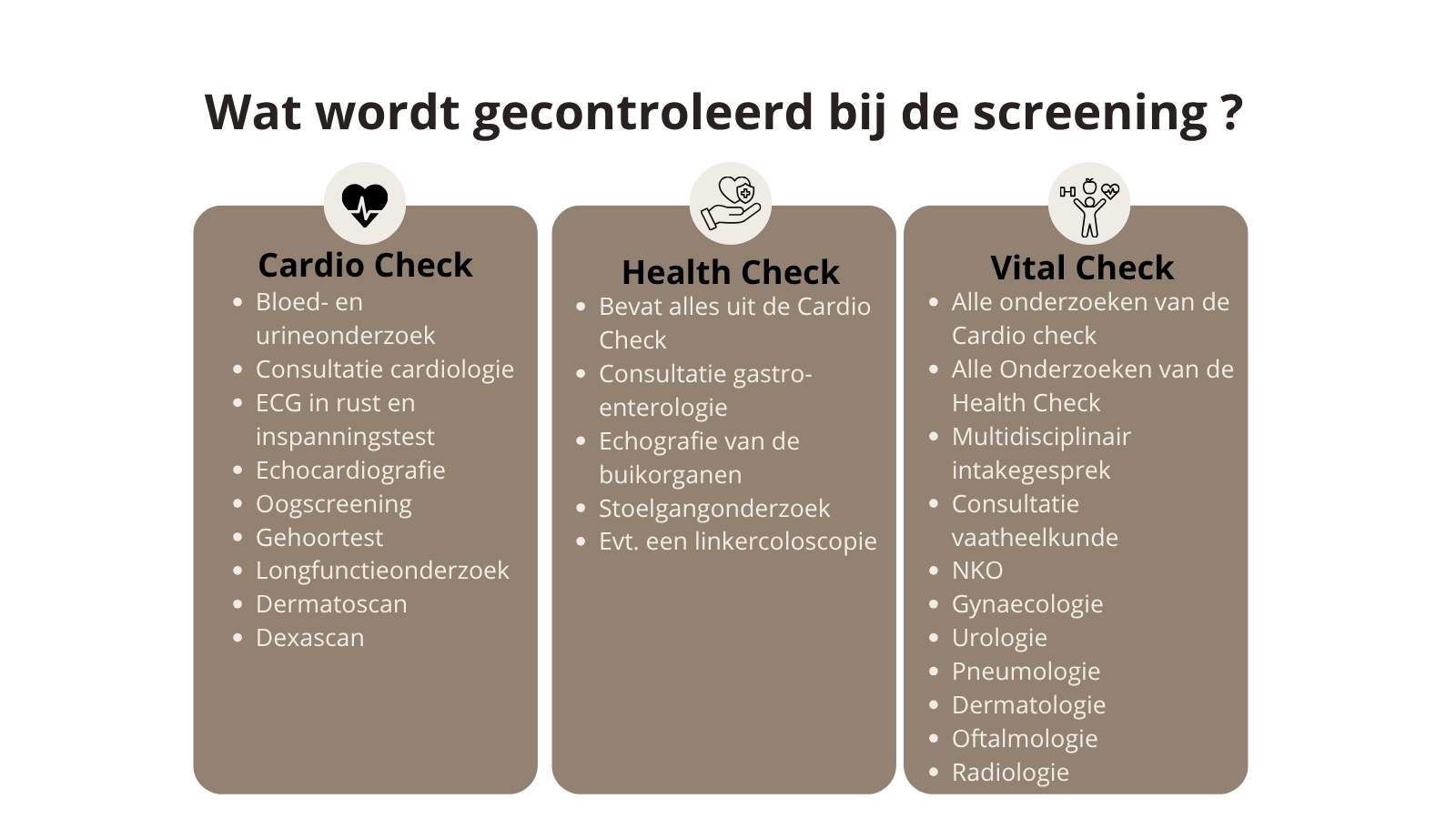
This examination focuses on heart, lungs and general health. The Cardio Check is designed for young adults and adults who want to have their cardiovascular health checked preventively. 1. Blood and urine testsWith a blood and urine analysis cholesterol levels, blood sugar, kidney function, liver function and inflammation levels, among others, are checked. This helps to detect early abnormalities or risk factors. 2. Consultation cardiologyDuring the conversation with the cardiologist your medical history, family burden and any complaints are discussed. In this way, cardiovascular risk can be better assessed. 3. ECG at restAn electrocardiogram records the electrical activity of the heart and can reveal cardiac arrhythmias or other abnormalities. 4. Exercise testDuring a controlled physical effort examines how your heart responds to strain. This examination helps detect any problems that only become visible during exercise. 5. EchocardiographyWith a ultrasound of the heart, the ventricles, heart valves and pumping function of the heart are imaged. 6. Eye screeningA eye examination not only checks your vision, but can also give clues about conditions such as high blood pressure, diabetes or retinal abnormalities. 7. Hearing testThrough a audiometric examination is checked for hearing loss or other hearing problems. 8. Pulmonary function testThis research measures how well your lungs are functioning and can provide clues to conditions such as asthma or COPD. 9. DermatoscanUsing specialised equipment, moles and skin abnormalities are checked for possible signs of skin cancer or other skin conditions. 10. Dexascan (bone measurement and fat measurement)A DEXA scan measures both bone density and body composition. This allows accurate evaluation of osteoporosis, muscle mass and fat distribution.
What is examined at a Health Check?
The Health Check includes all the examinations of the Cardio Check and is complemented by a thorough evaluation of the digestive system. 1. All Cardio Check examinations 2. Consultation gastroenterologyThe gastroenterologist assesses the health of your stomach, intestines, liver and digestive system and discusses any complaints or risk factors. 3. Ultrasound of the abdominal organsWith a painless ultrasound examination, organs such as the liver, gallbladder, kidneys, pancreas and spleen are examined for possible abnormalities. 4. Stool testA stool analysis can provide clues to intestinal problems, inflammation, blood loss or other abnormalities within the digestive system. 5. Possibly a left colonoscopyIf appropriate, a research of the last part of the colon are performed to detect polyps, inflammation or other abnormalities.
What is examined at a Vital Check?
The Vital Check offers an in-depth evaluation of multiple organ systems and is fully tailored to your personal health profile. 1. All examinations of the Cardio check 2. All Health Check examinations ( except stool test) 3. Multidisciplinary intake interviewDuring a comprehensive intake interview, several specialists identify your medical history, lifestyle, complaints and health goals. 4. Vascular surgery consultationThe vascular surgeon examines the health of your arteries and veins and assesses possible risks of vascular disease.
Optional tests at the Vital Check
Additional investigations may be scheduled depending on your medical situation: 5. NKO (Nose, throat and ear surgery)Examination of nose, throat, ears and balance to detect any conditions early. 6. GynaecologyPreventive control of female reproductive organs and hormonal health. 7. UrologyExamination of urinary tract, bladder, kidneys and prostate. 8. PneumologyIn-depth evaluation of lungs and airways in case of increased risks or complaints. 9. DermatologyComprehensive examination of skin, nails and hair by a skin specialist. 10. OphthalmologyA specialised eye and vision check-up. 11. Radiology Additional imaging such as RX, ultrasound or other investigations if medically indicated.
What is checked during a screening test?
Depending on the screening package chosen, the following health domains are checked, among others:
Prevention starts with insight
The earlier health risks are detected, the greater the chances of successful treatment or prevention of disease. That is why Doctor's House Antverpia various screening programmes tailored to your age, health condition and personal needs. Whether you choose a Cardio Check, Health Check or Vital Check, you will always receive a clear discussion of the results and personal advice from our specialists. Make your appointment and get through the medical screening process a complete picture of your health and you can work towards a healthy future with confidence.
Stay tuned
Stay up-to-date with current developments and insights within medical care. On our blog page, we share clear and reliable information on health, prevention and general medical topics. This gives you more insight and support to make informed choices around your health in an accessible way.
Make an appointment today
A stronger focus on prevention helps prevent disease, reduces pressure on care and keeps the system affordable. Investing in health before illness means more quality of life and a more sustainable future for all.
A close-knit team of specialists, where reliable care and a personalised approach are key.